
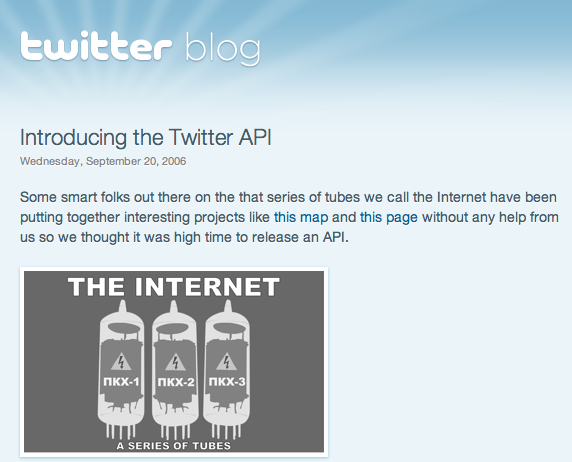
On September 20, 2006, Twitter introduced the Twitter API to the world. Similar to the release of the eBay API, Twitter’s API launch was a response to the growing number of users scraping the site or creating unofficial APIs. Twitter officially exposed its API through a RESTful interface, supporting both JSON and XML formats.
In its early days, Twitter relied on Basic Auth for API authentication. However, this approach culminated in the now-infamous Twitter OAuth Apocalypse nearly four years later, when Twitter mandated that all API users switch to OAuth. In just four years, the Twitter API became the backbone of countless desktop clients, mobile applications, web tools, and businesses—even powering Twitter’s own iPhone, iPad, and Android apps, as well as its public website.
What set Twitter apart from platforms like Facebook was the design of its API and the organic growth of its developer community. From 2006 onward, the Twitter API—and its developer ecosystem—was central to the platform’s success. However, as Twitter evolved into a global “town hall,” its relationship with developers began to shift.
Twitter stands as both a shining example of how to build a thriving API ecosystem—and a cautionary tale of what can happen when a platform’s priorities change.

