
Most technical folks do not understand API Evangelist rants about the technology, business, and politics of APIs. Most technologists live in the comfortable silo of technosolutionism and choose to deal with whatever comes their way from the business side, while building castle walls and moats to defend themselves from all of the politics. API Evangelist sees wave after wave of startups come along with plenty of cock sure entrepreneurs who know their stuff and are going to fix the space and make a ton of money while they are at it. API Evangelist engages with and will play nicely (mostly) with all of these API service and tooling product, but can usually predict where things will lead within the first couple of conversations we have with the teams behind each wave.
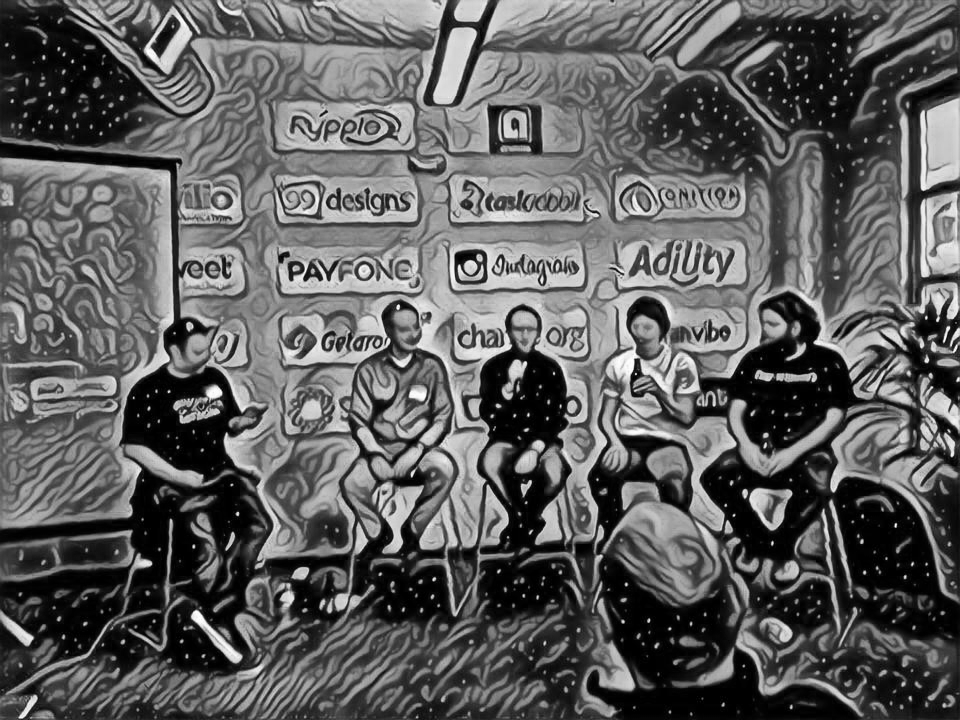
When it comes to this narrative, libopenmpi captures the narrative of the last decade for us. Don’t stop at the home page, work your way through every section on the left-hand navigation beginning with the about page. The narrative is uncanny as it starts with kin-openapi and dives into the MASSIVE DIFF that occurred between OpenAPI and Swagger that so many developers do not see or understand. The story literally references the API wars, which I spent seven years sending home dispatches on the front lines of (bonus if you can name everyone in that photo, the only complicit party missing is Augusto of Kong). The details of the way qubix tells the story leaves me feeling a little shaking from PTSD of the war, but also the time travel between multiple the real and alternate dimension–which can be taxing.
The narrative in the about page, installing, using OpenAPI, and using Swagger is captivating, but the WORK represented in the data model, modifying, rolodex, resolver, circular refs, bundling, validating, and extending sections of libopenapi is even more essential and compelling. This is the narrative that I have been witness to in the back rooms for over a decade with every single enterpreneur who encountered this work choosing to keep their solution proprietary and baked it into their venture backed startup rather than making available as open-source for the community to build upon. I can fill up one or maybe two hands counting the number of startups who kept this work for themselves rather than deeming it worthy of bestowing upon the community. I am concerned with quobix’s sanity after going down this rabbit hole of work and coming out believing the community should have access to this work–clearly they are the chosen one.

We are sure that many folks who are reading this post will be dismissing it as just another wacky story by the API Evangelist. That is fine. It is. However, if you fully understood how much work is represented in libopenapi, and if we had all had this in 2015, the API space would be very, very, very different. This work is normally the sleight of hand that occurs with startups telling us all that they are the smartest in the room, providing all the solutions we need, but in reality are running away with the farm. When in reality, everything listed here is what we collectively need to build the API economy, but has been held back from us by startups and their investors. It is really a tough thing to convey unless you were in these closed door conversations or did the work that quobix has done.
It will take a week or two, but we will work through the libopenapi narrative and write a story about every single piece of value present in there and why it applies. We alluded to some of this value in a recent story about OpenAPI Doctor and Vacuum, but libopenapi is really the enabling piece of technology. OpenAPI Doctor will play a massive role in bringing this value and vision to market, and Vacuum will shift API governance into the next gear, but all of it is possible because of the work available in libopenapi. I have to admit, when I first read the README for Vacuum I dismissed it because of the talk of “performance” which I read as the usual worshipping of speed, velocity, and efficiency I hear so much about, but now that I understand the way in which quobix wields that word and the experience it is derived from—I am on board. Thanks quobix!!

