
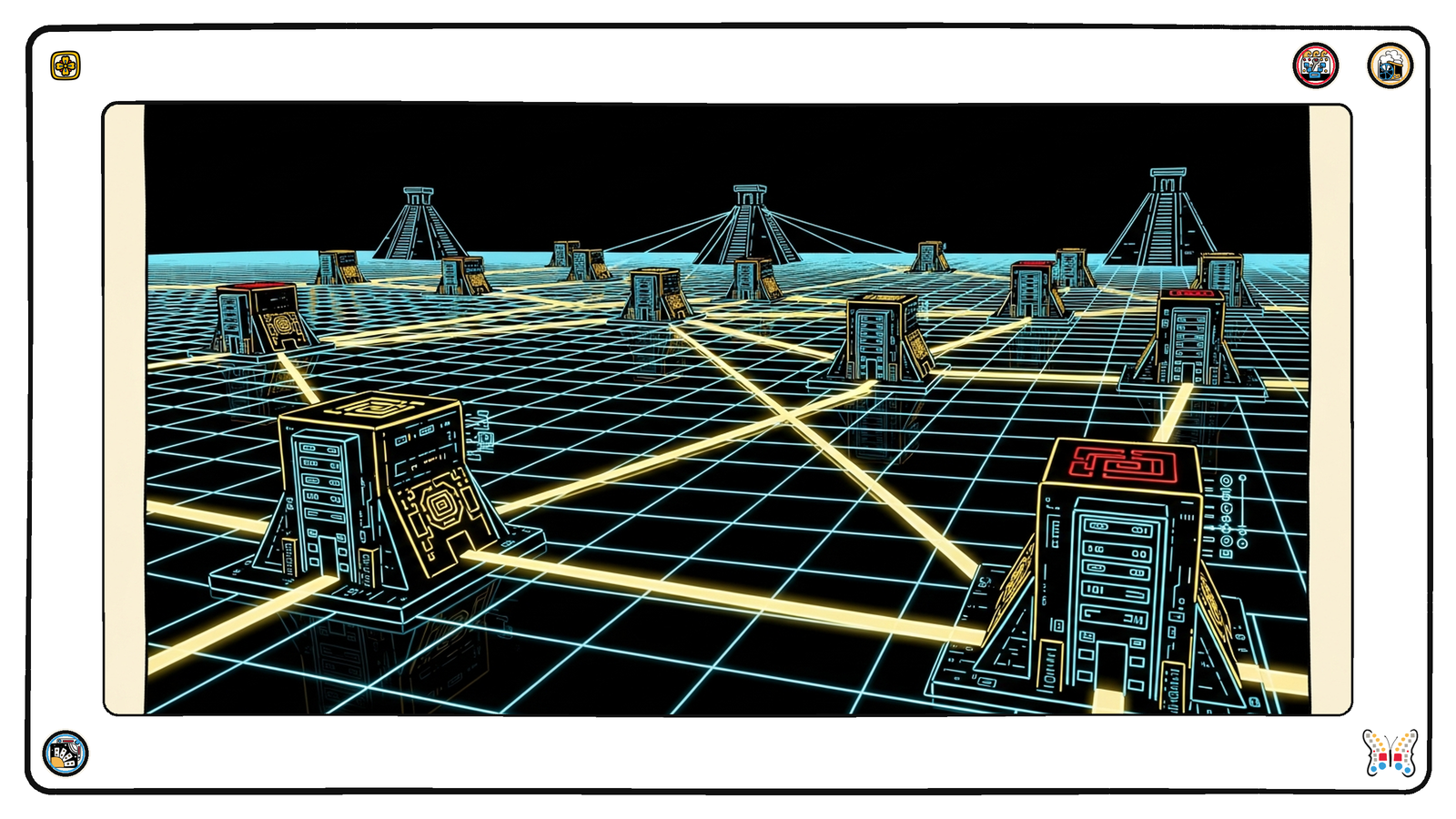
The MCP story so far has been a story of proliferation. Every vendor ships a server. Every product team ships a server. My own network is full of them — I have written about every provider in my catalog that ships an MCP server, grouped by tag, and the list keeps growing every week. This is what the first phase of any new interface looks like: everybody builds one, nobody coordinates, and pretty soon you are drowning in them. An agent that wants to actually get work done now has to reckon with dozens of servers, hundreds of tools, overlapping capabilities, no shared naming, and no map. Proliferation without coordination is not an ecosystem. It is sprawl. And the thing that turns MCP sprawl back into value is the same thing that has turned every other kind of API sprawl into value: federation.
I have been beating the federation drum for a while now in the governance world, from the federated API governance rule registry to my insistence that there is no platform that saves you from the underlying discovery problem. MCP has walked itself into exactly the same place, just faster. The instinct, when there are too many servers, is to reach for a central one — a single server that swallows all the tools and hands the agent one throat to choke. That instinct is wrong for MCP for the same reason it is wrong for governance: the moment you centralize, you own everything, you become the bottleneck for everyone, and you have quietly taken on the job of speaking for capabilities you do not control and cannot keep current. Centralization does not scale, and it does not survive contact with an ecosystem that keeps shipping new servers every week.
Federation is the other answer, and it is the right one. A federated approach does not try to absorb every MCP server into one. It keeps the servers where they are, owned by the people who actually own the capabilities, and it builds a layer above them that makes the whole set discoverable, searchable, and composable — a way to find the right server and the right tool for a job without knowing in advance that either exists. This is discovery and governance, applied to MCP. It is the difference between an agent brute-forcing its way through forty servers and an agent asking one well-designed question and being pointed at the three tools that actually matter. The federated layer does not own the capabilities. It indexes them, describes them, and routes to them, and it lets the servers stay federated instead of forcing them into a false center.
This is a large part of why I built APIs.io the way I did, and why it is itself an MCP server. The point of the catalog was never to become the one server that owns everything — it was to be the federated index across an enormous, messy, distributed set of providers, so that a consumer, human or agent, could discover what exists without having to already know. Applying that to MCP is the obvious next move: a federated discovery layer over the sprawl, where every provider keeps their own server and their own capabilities, and the value is in the connective index that lets an agent navigate all of them coherently. The same OpenAPI-for-MCP description work that lets us describe a single server in machine-readable form is exactly what makes federating hundreds of them possible — you cannot index what nobody has described.
And the federated layer is where the governance finally has somewhere to live. When every server is an island, there is no place to ask the questions that matter across the whole estate — which tools touch sensitive data, which capabilities an agent should be allowed to reach, which servers are trustworthy and current versus abandoned. A federated index is exactly the vantage point from which those questions become answerable, because for the first time you can see all the servers at once without pretending to own them. Federation gives you the map, and the map is where governance, discovery, and trust all become possible. Without it you have sprawl with no vantage point, which is where MCP is today.
So the aspect MCP most needs next is not a bigger, more capable individual server, and it is definitely not one central server to rule them all. It is the federated layer above the servers — the index, the discovery surface, the connective tissue that turns dozens of disconnected servers into one navigable, governable landscape while leaving every server exactly where it is, owned by whoever owns the capability. We have watched this movie before with APIs, with governance, with discovery. The proliferation phase is loud and exciting and produces a hundred servers. The value phase is quieter, and it is federated. MCP is ready for the second phase, and the sooner we build the layer that federates it, the sooner all those servers stop being sprawl and start being an ecosystem.

